Jiaya Jia (Chinese: 贾佳亚) is a Chair Professor of the Department of Computer Science and Engineering at The Hong Kong University of Science and Technology (HKUST). He is an IEEE Fellow, the associate editor-in-chief of one of IEEE’s flagship and premier journals- Transactions on Pattern Analysis and Machine Intelligence (TPAMI), as well as on the editorial board of International Journal of Computer Vision (IJCV). == Early life and education == Jiaya Jia joined CUHK in 2004 as an assistant professor, and was promoted to full professor in 2015. He obtained his PhD degree in computer science jointly from Hong Kong University of Science and Technology and Microsoft Research in 2004. From March 2003 to August 2004, he was a visiting scholar at Microsoft. He conducted collaborative research at Adobe Research in 2007. == Career == Jiaya Jia is a distinguished scientist in the fields of computer vision and artificial intelligence. His research team at HKUST, DV Lab, is one of the largest vision AI research teams in the world and has been making significant contribution to advanced development of computer vision algorithms and technologies with focuses on image/video understanding, detection and segmentation, multi-modal AI, computational imaging, practical optimization, and advanced learning for visual content since 2000. Jiaya Jia has published 200+ top papers and was cited 80,000+ times on Google Scholar with H-Index 110+. 40+ PhDs and fellows from this group are now active in academia and industry, and have become prominent AI tech leaders as professors, directors in major research labs, and founders of several successful startups. Jiaya Jia assumes the position of associate editor-in-chief of IEEE Transactions on Pattern Analysis and Machine Intelligence (TPAMI) since 2021. He is also on the editorial board of International Journal of Computer Vision (IJCV). Jiaya Jia has served as the area chair of ICCV, CVPR, AAAI, ECCV, and several other premium international AI conferences for years. He was on program committees of major conferences in graphics and computational imaging, including ICCP, SIGGRAPH, and SIGGRAPH Asia. == Research == The research areas of Jiaya Jia are computer vision, large X models, and deep learning. Jiaya Jia has made outstanding contributions to computer vision technology, algorithms and engineering, and is among the world's leading experts in the field. His research partners include numerous renowned multinational technology companies, such as Microsoft, Qualcomm, Adobe, Intel, NVIDIA, Amazon, and Lenovo. Jia has cultivated a number of outstanding talents with Master's and PhDs who continue to engage in scientific research and development in computer vision. Many technologies in image analysis and processing developed by Jiaya Jia are still leading in the field worldwide. Wherein, his achievements in image deblurring, filtering, image sparse processing, multi-band image signal fusion and enhancement, large range motion estimation, texture and structure-based layering, etc. have been published in the industry's most influential conferences and publications, and implemented in the real-world applications. These achievements have demonstrated outstanding performance in established systems, and most of which are open source so as to enable wider applications across industries such as aviation, medical imaging, safety management, robotic design, meteorological analysis and many more. == Selected publications == In his over 20 years of research experience, Jiaya Jia has published 200+ top papers that have been cited more than 80,000 times. According to HKUST Website in August 2024, Jiaya Jia has accumulatively published over 200 scientific papers in books, journals and conferences, such as IEEE Transactions on Pattern Analysis and Machine Intelligence (TPAMI), International Journal of Computer Vision (IJCV) "Computer Vision and Pattern Recognition (CVPR)", and "International Conference on Computer Vision (ICCV)". Representative papers include: Jiaya Jia: Mathematical Models and Practical Solvers for Uniform Motion Deblurring (in Motion Deblurring: Algorithms and Systems), Cambridge University Press, ISBN 9781107044364, 2014; Jiaya Jia: “Matte Extraction” Book: Computer Vision - A Reference Guide, Springer, ISBN 9780387307718 Editor-in-chief: Ikeuchi, Katsushi; Jiaya Jia, Chi-Keung Tang:Image Stitching Using Structure Deformation,IEEE Transactions on Pattern Analysis and Machine Intelligence (TPAMI), Vol. 30, No. 4, 2008; Jiaya Jia, Jian Sun, Chi-Keung Tang, Heung-Yeung Shum:Drag-and-Drop Pasting,ACM Transactions on Graphics (also in SIGGRAPH 2006), Vol. 25, No. 3, 2006. Xiaojuan Qi, Zheng zhe Liu, Renjie Liao, Philip HS Torr, Raquel Urtasun, Jiaya Jia:GeoNet++: Iterative Geometric Neural Network with Edge-Aware Refinement for Joint Depth and Surface Normal Estimation,IEEE Transactions on Pattern Analysis and Machine Intelligence (TPAMI). Accepted. == Selected honors and awards == ACM Fellow. 1st Place of WAD Drivable Area Segmentation Challenge 2018; 1st Place of LSUN'17 Instance and Semantic Segmentation Challenges; 1st Place of COCO Instance Segmentation Challenge 2017; 2nd Place in COCO Detection Challenge 2017; 1st Place of ImageNet Scene Parsing Challenge 2016 with the paper PSPNet presented in CVPR 2017.
Apache Pig
Apache Pig is a high-level platform for creating programs that run on Apache Hadoop. The language for this platform is called Pig Latin. Pig can execute its Hadoop jobs in MapReduce, Apache Tez, or Apache Spark. Pig Latin abstracts the programming from the Java MapReduce idiom into a notation which makes MapReduce programming high level, similar to that of SQL for relational database management systems. Pig Latin can be extended using user-defined functions (UDFs) which the user can write in Java, Python, JavaScript, Ruby or Groovy and then call directly from the language. == History == Apache Pig was originally developed at Yahoo Research around 2006 for researchers to have an ad hoc way of creating and executing MapReduce jobs on very large data sets. In 2007, it was moved into the Apache Software Foundation. === Naming === Regarding the naming of the Pig programming language, the name was chosen arbitrarily and stuck because it was memorable, easy to spell, and for novelty. The story goes that the researchers working on the project initially referred to it simply as 'the language'. Eventually they needed to call it something. Off the top of his head, one researcher suggested Pig, and the name stuck. It is quirky yet memorable and easy to spell. While some have hinted that the name sounds coy or silly, it has provided us with an entertaining nomenclature, such as Pig Latin for the language, Grunt for the shell, and PiggyBank for the CPAN-like shared repository. == Example == Below is an example of a "Word Count" program in Pig Latin: The above program will generate parallel executable tasks which can be distributed across multiple machines in a Hadoop cluster to count the number of words in a dataset such as all the webpages on the internet. == Pig vs SQL == In comparison to SQL, Pig has a nested relational model, uses lazy evaluation, uses extract, transform, load (ETL), is able to store data at any point during a pipeline, declares execution plans, supports pipeline splits, thus allowing workflows to proceed along DAGs instead of strictly sequential pipelines. On the other hand, it has been argued DBMSs are substantially faster than the MapReduce system once the data is loaded, but that loading the data takes considerably longer in the database systems. It has also been argued RDBMSs offer out of the box support for column-storage, working with compressed data, indexes for efficient random data access, and transaction-level fault tolerance. Pig Latin is procedural and fits very naturally in the pipeline paradigm while SQL is instead declarative. In SQL users can specify that data from two tables must be joined, but not what join implementation to use (You can specify the implementation of JOIN in SQL, thus "... for many SQL applications the query writer may not have enough knowledge of the data or enough expertise to specify an appropriate join algorithm."). Pig Latin allows users to specify an implementation or aspects of an implementation to be used in executing a script in several ways. In effect, Pig Latin programming is similar to specifying a query execution plan, making it easier for programmers to explicitly control the flow of their data processing task. SQL is oriented around queries that produce a single result. SQL handles trees naturally, but has no built in mechanism for splitting a data processing stream and applying different operators to each sub-stream. Pig Latin script describes a directed acyclic graph (DAG) rather than a pipeline. Pig Latin's ability to include user code at any point in the pipeline is useful for pipeline development. If SQL is used, data must first be imported into the database, and then the cleansing and transformation process can begin.
Wispr
Wispr AI is a software company founded in 2021 by Tanay Kothari and Sahaj Garg that develops voice-based interfaces for computers and other devices. The company’s main product, Wispr Flow, is an AI-powered speech-to-text application available on macOS, Windows and iOS. == History == Wispr was founded in 2021 with the goal of building a non-invasive wearable device that would allow users to control smartphones without touch input. The device was intended to translate neurological signals into actions and to enable silent text entry by mouthing words, drawing on techniques similar to brain–computer interfaces. Early funding was directed toward this hardware-focused effort. After around three years of development, Wispr concluded that contemporary AI systems were not sufficient for the requirements of the wearable device. The company shifted its focus to Flow voice dictation software, the software layer originally built for the wearable, and in 2024 released a macOS application based on this platform. == Wispr Flow == Wispr Flow (often referred to as Flow) is a speech-to-text application for macOS, Windows and iOS. It provides real-time dictation and transcription in more than 100 languages and can operate across applications, including email clients, messaging platforms and chatbots. In June 2025 Wispr released an iOS version that functions as a third-party keyboard, allowing voice input in any app. == Technology == Wispr Flow is based on automatic speech recognition (ASR) and other AI models. The system adapts to individual users over time, learning their vocabulary and preferred style with the aim of reducing manual editing. Flow operates through configurable “Flow Sessions”, defined as time windows during which the app has access to the microphone; users can set session timeouts or disable automatic time limits. == Users and Adoption == Wispr initially targeted users such as venture capitalists, entrepreneurs and executives who process large volumes of text and often work in private or flexible environments. The user base later expanded via platforms such as Product Hunt to students, software developers, writers, lawyers and consultants. Flow has also been adopted by users with conditions such as ADHD, dyslexia, paralysis and carpal tunnel syndrome. About 40% of users are in the United States, 30% in Europe and the remaining 30% in other regions. More than 30% of users come from non-technical backgrounds. Flow supports 104 languages, with approximately 40% of dictations in English and 60% in other languages, including Spanish, French, German, Dutch, Hindi and Mandarin. Wispr has reported monthly user growth above 50%, a six-month active-user retention rate of about 80%, a payment rate around 19%, and revenue of approximately US$3.8 million between July 2024 and July 2025. == Development == Wispr has announced plans for an Android application and maintains waiting lists for Android, Linux and web versions of Flow. The company is developing shared-context features for teams so that the software can recognize common terminology within organizations and has stated that it aims to evolve Flow into a broader AI assistant for tasks such as messaging, note-taking and reminders. Wispr has also reported working with unnamed AI hardware partners on interaction layers for future devices. == Funding == In 2025 Wispr raised US$30 million in a Series A funding round led by Menlo Ventures, with participation from NEA, 8VC and several individual investors, including Evan Sharp and Henry Ward. Earlier investors include Neo, MVP Ventures and AIX Ventures. In November of that same year, the company raised a US$25 million Series A extension led by Notable Capital, with participation from Flight Fund, bringing its total funding to US$81 million. Wispr competes with other AI-based dictation and voice-input tools, including Aqua, Talktastic, Superwhisper and Betterdication.
Plum Voice
The Plum Group, Inc. (DBA Plum Voice) is a company. Plum is headquartered in New York City with offices in Boston and Denver. == History == Plum Voice, founded in 2000 as The Plum Group, Inc., was incorporated to create technologies for personalized audio communication. By 2001, Plum had commercialized the open-standard Plum VoiceXML IVR platform which facilitated the creation of dynamic telecom applications. 2001 - Commercial launch of Plum VoiceXML IVR platform for customer-premises deployment 2002 - Launch of Plum Voice Hosting Centers for 24x7x365 managed IVR hosting 2004 - Plum Voice application suite receives a "Product of the Year" award from Customer Interactions magazine 2008 - Plum Survey builder launched, a do-it-yourself IVR survey tool. 2010 - Plum launched QuickFuse, a web-based rapid development platform used to create voice applications. 2013 - Plum launched VoiceTrends, an analytics and reporting toolkit designed specifically for voice applications. Plum achieves PCI-DSS Level 1. 2015 - Plum launched Plum Insight, a multi-channel (voice, web, mobile) survey platform. Plum achieves HIPAA compliance. 2016 - Plum launched a new version of QuickFuse called Fuse+. 2020 - Plum sunsets QuickFuse, rebrands Fuse+ as Plum Fuse.
Network Abstraction Layer
The Network Abstraction Layer (NAL) is a part of the H.264/AVC and HEVC video coding standards. The main goal of the NAL is the provision of a "network-friendly" video representation addressing "conversational" (video telephony) and "non conversational" (storage, broadcast, or streaming) applications. NAL has achieved a significant improvement in application flexibility relative to prior video coding standards. == Introduction == An increasing number of services and growing popularity of high definition TV are creating greater needs for higher coding efficiency. Moreover, other transmission media such as cable modem, xDSL, or UMTS offer much lower data rates than broadcast channels, and enhanced coding efficiency can enable the transmission of more video channels or higher quality video representations within existing digital transmission capacities. Video coding for telecommunication applications has diversified from ISDN and T1/E1 service to embrace PSTN, mobile wireless networks, and LAN/Internet network delivery. Throughout this evolution, continued efforts have been made to maximize coding efficiency while dealing with the diversification of network types and their characteristic formatting and loss/error robustness requirements. The H.264/AVC and HEVC standards are designed for technical solutions including areas like broadcasting (over cable, satellite, cable modem, DSL, terrestrial, etc.) interactive or serial storage on optical and magnetic devices, conversational services, video-on-demand or multimedia streaming, multimedia messaging services, etc. Moreover, new applications may be deployed over existing and future networks. This raises the question about how to handle this variety of applications and networks. To address this need for flexibility and customizability, the design covers a NAL that formats the Video Coding Layer (VCL) representation of the video and provides header information in a manner appropriate for conveyance by a variety of transport layers or storage media. The NAL is designed in order to provide "network friendliness" to enable simple and effective customization of the use of VCL for a broad variety of systems. The NAL facilitates the ability to map VCL data to transport layers such as: RTP/IP for any kind of real-time wire-line and wireless Internet services. File formats, e.g., ISO MP4 for storage and MMS. H.32X for wireline and wireless conversational services. MPEG-2 systems for broadcasting services, etc. The full degree of customization of the video content to fit the needs of each particular application is outside the scope of the video coding standardization effort, but the design of the NAL anticipates a variety of such mappings. Some key concepts of the NAL are NAL units, byte stream, and packet formats uses of NAL units, parameter sets, and access units. A short description of these concepts is given below. == NAL units == The coded video data is organized into NAL units, each of which is effectively a packet that contains an integer number of bytes. The first byte of each H.264/AVC NAL unit is a header byte that contains an indication of the type of data in the NAL unit. For HEVC the header was extended to two bytes. All the remaining bytes contain payload data of the type indicated by the header. The NAL unit structure definition specifies a generic format for use in both packet-oriented and bitstream-oriented transport systems, and a series of NAL units generated by an encoder is referred to as a NAL unit stream. == NAL Units in Byte-Stream Format Use == Some systems require delivery of the entire or partial NAL unit stream as an ordered stream of bytes or bits within which the locations of NAL unit boundaries need to be identifiable from patterns within the coded data itself. For use in such systems, the H.264/AVC and HEVC specifications define a byte stream format. In the byte stream format, each NAL unit is prefixed by a specific pattern of three bytes called a start code prefix. The boundaries of the NAL unit can then be identified by searching the coded data for the unique start code prefix pattern. The use of emulation prevention bytes guarantees that start code prefixes are unique identifiers of the start of a new NAL unit. A small amount of additional data (one byte per video picture) is also added to allow decoders that operate in systems that provide streams of bits without alignment to byte boundaries to recover the necessary alignment from the data in the stream. Additional data can also be inserted in the byte stream format that allows expansion of the amount of data to be sent and can aid in achieving more rapid byte alignment recovery, if desired. == NAL Units in Packet-Transport System Use == In other systems (e.g., IP/RTP systems), the coded data is carried in packets that are framed by the system transport protocol, and identification of the boundaries of NAL units within the packets can be established without use of start code prefix patterns. In such systems, the inclusion of start code prefixes in the data would be a waste of data carrying capacity, so instead the NAL units can be carried in data packets without start code prefixes. == VCL and Non-VCL NAL Units == NAL units are classified into VCL and non-VCL NAL units. VCL NAL units contain the data that represents the values of the samples in the video pictures. Non-VCL NAL units contain any associated additional information such as parameter sets (important header data that can apply to a large number of VCL NAL units) and supplemental enhancement information (timing information and other supplemental data that may enhance usability of the decoded video signal but are not necessary for decoding the values of the samples in the video pictures). == Parameter Sets == A parameter set contains shared configuration data that is carried in non-VCL NAL units. Parameter sets are typically reused when decoding many coded pictures within a video sequence. Each VCL NAL unit references a picture parameter set (PPS), which in turn references a sequence parameter set (SPS). There are two types of parameter sets: Sequence parameter set (SPS), which specifies mostly constant configuration such as resolution, bit depth, or chroma format. (For a concrete implementation, see FFmpeg's SPS struct.) Picture parameter set (PPS), which applies on top of an SPS, and specifies configuration such as QP offsets. (For a concrete implementation, see FFmpeg's PPS struct.) The sequence and picture parameter-set mechanism decouples the transmission of infrequently changing information from the transmission of coded representations of the values of the samples in the video pictures. Each VCL NAL unit contains an identifier that refers to the content of the relevant picture parameter set and each picture parameter set contains an identifier that refers to the content of the relevant sequence parameter set. In this manner, a small amount of data (the identifier) can be used to refer to a larger amount of information (the parameter set) without repeating that information within each VCL NAL unit. Sequence and picture parameter sets can be sent well ahead of the VCL NAL units that they apply to, and can be repeated to provide robustness against data loss. In some applications, parameter sets may be sent within the channel that carries the VCL NAL units (termed "in-band" transmission). In other applications, it can be advantageous to convey the parameter sets "out-of-band" using a more reliable transport mechanism than the video channel itself. == Access Units == A set of NAL units in a specified form is referred to as an access unit. The decoding of each access unit results in one decoded picture. Each access unit contains a set of VCL NAL units that together compose a primary coded picture. It may also be prefixed with an access unit delimiter to aid in locating the start of the access unit. Some supplemental enhancement information containing data such as picture timing information may also precede the primary coded picture. The primary coded picture consists of a set of VCL NAL units consisting of slices or slice data partitions that represent the samples of the video picture. Following the primary coded picture may be some additional VCL NAL units that contain redundant representations of areas of the same video picture. These are referred to as redundant coded pictures, and are available for use by a decoder in recovering from loss or corruption of the data in the primary coded pictures. Decoders are not required to decode redundant coded pictures if they are present. Finally, if the coded picture is the last picture of a coded video sequence (a sequence of pictures that is independently decodable and uses only one sequence parameter set), an end of sequence NAL unit may be present to indicate the end of the sequence; and if the coded picture is the last coded picture in the entire NAL unit stream, an end of stream NAL unit may be present to
Winner-take-all in action selection
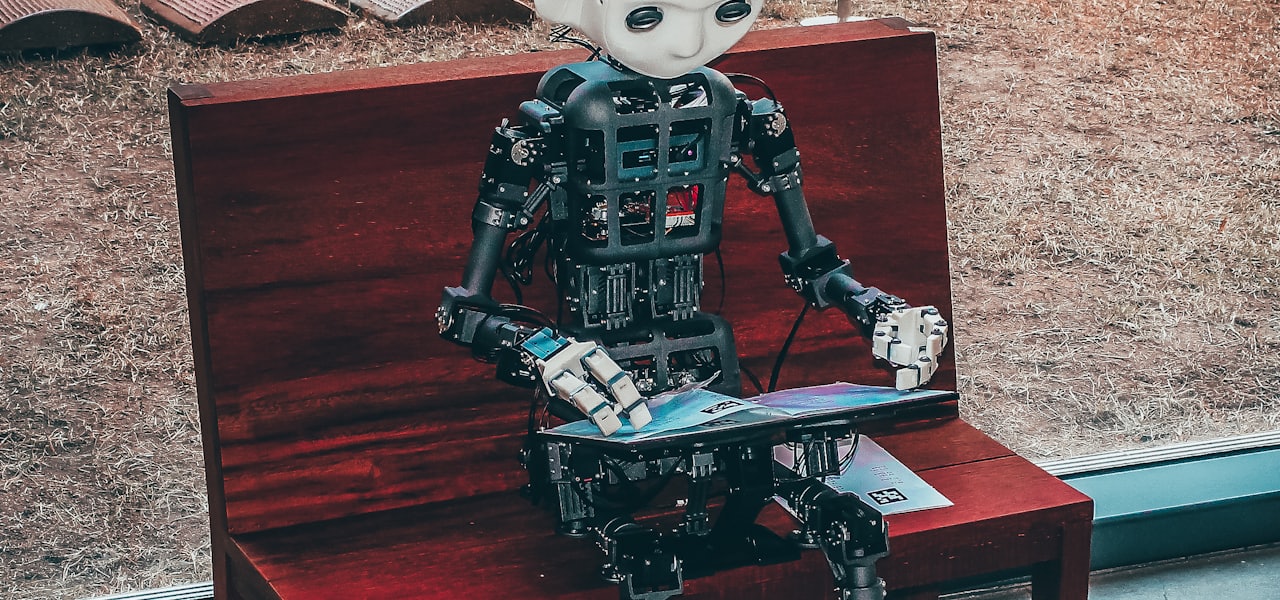
Winner-take-all is a computer science concept that has been widely applied in behavior-based robotics as a method of action selection for intelligent agents. Winner-take-all systems work by connecting modules (task-designated areas) in such a way that when one action is performed it stops all other actions from being performed, so only one action is occurring at a time. The name comes from the idea that the "winner" action takes all of the motor system's power. == History == In the 1980s and 1990s, many roboticists and cognitive scientists were attempting to find speedier and more efficient alternatives to the traditional world modeling method of action selection. In 1982, Jerome A. Feldman and D.H. Ballard published the "Connectionist Models and Their Properties", referencing and explaining winner-take-all as a method of action selection. Feldman's architecture functioned on the simple rule that in a network of interconnected action modules, each module will set its own output to zero if it reads a higher input than its own in any other module. In 1986, Rodney Brooks introduced behavior-based artificial intelligence. Winner-take-all architectures for action selection soon became a common feature of behavior-based robots, because selection occurred at the level of the action modules (bottom-up) rather than at a separate cognitive level (top-down), producing a tight coupling of stimulus and reaction. == Types of winner-take-all architectures == === Hierarchy === In the hierarchical architecture, actions or behaviors are programmed in a high-to-low priority list, with inhibitory connections between all the action modules. The agent performs low-priority behaviors until a higher-priority behavior is stimulated, at which point the higher behavior inhibits all other behaviors and takes over the motor system completely. Prioritized behaviors are usually key to the immediate survival of the agent, while behaviors of lower priority are less time-sensitive. For example, "run away from predator" would be ranked above "sleep." While this architecture allows for clear programming of goals, many roboticists have moved away from the hierarchy because of its inflexibility. === Heterarchy and fully distributed === In the heterarchy and fully distributed architecture, each behavior has a set of pre-conditions to be met before it can be performed, and a set of post-conditions that will be true after the action has been performed. These pre- and post-conditions determine the order in which behaviors must be performed and are used to causally connect action modules. This enables each module to receive input from other modules as well as from the sensors, so modules can recruit each other. For example, if the agent's goal were to reduce thirst, the behavior "drink" would require the pre-condition of having water available, so the module would activate the module in charge of "find water". The activations organize the behaviors into a sequence, even though only one action is performed at a time. The distribution of larger behaviors across modules makes this system flexible and robust to noise. Some critics of this model hold that any existing set of division rules for the predecessor and conflictor connections between modules produce sub-par action selection. In addition, the feedback loop used in the model can in some circumstances lead to improper action selection. === Arbiter and centrally coordinated === In the arbiter and centrally coordinated architecture, the action modules are not connected to each other but to a central arbiter. When behaviors are triggered, they begin "voting" by sending signals to the arbiter, and the behavior with the highest number of votes is selected. In these systems, bias is created through the "voting weight", or how often a module is allowed to vote. Some arbiter systems take a different spin on this type of winner-take-all by using a "compromise" feature in the arbiter. Each module is able to vote for or against each smaller action in a set of actions, and the arbiter selects the action with the most votes, meaning that it benefits the most behavior modules. This can be seen as violating the general rule against creating representations of the world in behavior-based AI, established by Brooks. By performing command fusion, the system is creating a larger composite pool of knowledge than is obtained from the sensors alone, forming a composite inner representation of the environment. Defenders of these systems argue that forbidding world-modeling puts unnecessary constraints on behavior-based robotics, and that agents benefits from forming representations and can still remain reactive.
EffectsLab Pro
EffectsLab Pro is a discontinued visual effects software product developed by FXhome. It has since been superseded by the FXhome HitFilm range. The company also produced a limited functionality version, EffectsLab Lite, containing just the Particle engine. A more extensive product, VisionLab Studio, combined the functionality of EffectsLab Pro and the company's CompositeLab Pro product with enhancements to both. == Effects Engines == The effects are generated by the program's effect engines: The Neon Light engine allows light beams to be drawn onto the video, allowing the generation of lightsaber-like weapons, neon lighting, fantasy glow effects and laser blasts. The Particle engine is used for particle effects, such as smoke, fire, explosions, and weather effects. The Muzzle Flash engine is designed for creating and animating muzzle flashes such as machine gun firing, tank blasts, etc. It's possible to rotate the created muzzle flash in 3D, making it the only engine with 3D use. The Optics engine is designed for creating artificial lens flares and light sources. It is useful for enhancing other light-based effects, and mimicking the distinctive flashes of light that accompany Star Wars' lightsaber battles. The Laser engine (introduced in EffectsLab Pro in late 2007) is designed as a simplified method of creating laser weapon effects, including the ability to add simulated perspective to the effect. == Presets == EffectsLab Pro allows the user to save the effects using presets. Since all effects are generated from settings in the different engines, it is fairly easy to generate an XML style description of the effect. It is also possible to share presets on FXhome's website.